












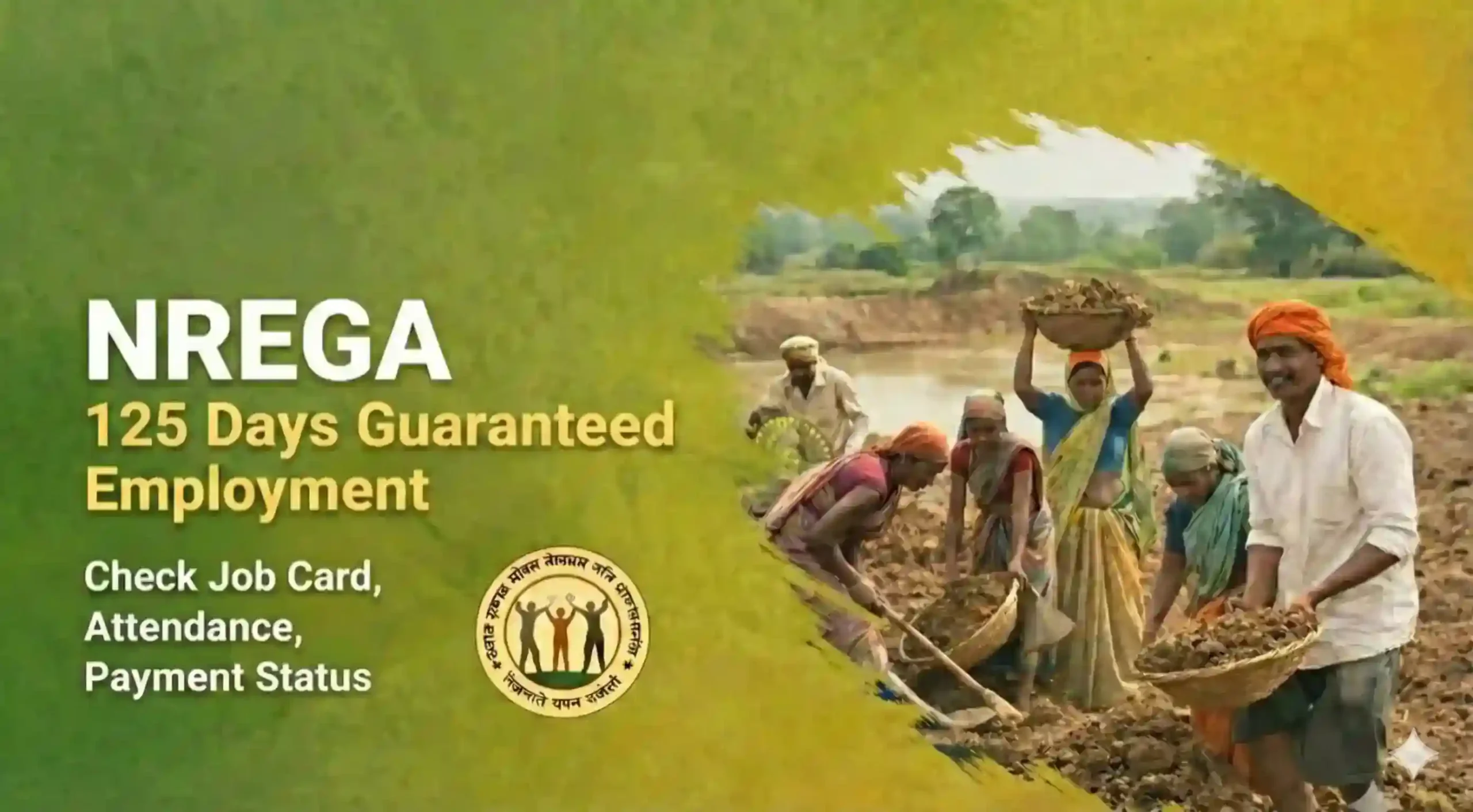
The National Rural Employment Guarantee Act (NREGA), officially known as the Mahatma Gandhi National Rural Employment Guarantee Act (MGNREGA), is a flagship Indian social security measure aimed at improving the livelihood security of rural households. Enacted in 2005, NREGA promises a minimum of 100 days of wage employment per financial year to every rural household whose adult members volunteer to do unskilled manual labor. This scheme operates not only as a tool for livelihood generation but also as a catalyst for strengthening rural infrastructure through the development of assets.
In understanding the scheme, two essential aspects emerge: “What is NREGA?” and how it contributes to uplifting rural families economically and socially. Moreover, associated databases like the NREGA job card list, which tracks workers’ employment under the scheme, add to the transparency and accessibility of this initiative.
What Is NREGA? An Overview
The Mahatma Gandhi National Rural Employment Guarantee Act is a statutory commitment by the Indian government to provide social safety nets for rural citizens. The Act mandates a legal guarantee of wage employment to rural households. Unlike many welfare programs, it is demand-driven, which means workers are required to request jobs, and the government is legally obligated to provide employment or risk paying unemployment allowances.
The program is implemented across rural areas of India and has been recognized globally for its rights-based approach to poverty alleviation. Each household registered under the scheme is provided with an NREGA job card, a critical document that records employment details and serves as proof of entitlement.
Some notable features of NREGA include:
Unskilled Wage Employment
The scheme includes labor-intensive projects such as water conservation, afforestation, road construction, and land development, requiring no specialized skills.
Time-Bound Employment Guarantees
Work must be provided within 15 days of a request being placed; failure to do so obligates the government to pay unemployment allowances.
Wage Transparency and Fairness
Payment is made through direct transfer to workers’ bank accounts or post office accounts, ensuring minimal leakage and corruption.
Inequality Reduction
The Act focuses on disadvantaged groups, including women, Scheduled Castes (SCs), Scheduled Tribes (STs), and small farmers.
How Does NREGA Benefit Rural Families?
NREGA has been instrumental in addressing rural economic disparities, empowering vulnerable populations, and building sustainable rural infrastructure. Below are the detailed ways in which NREGA benefits rural families:
Employment Generation
NREGA provides consistent job opportunities, safeguarding families against complete economic deprivation during lean agricultural seasons or downturns in labor markets. Each rural household is guaranteed 100 days of wage employment annually, ensuring basic income security.
For example, if a family participates in the program and earns the minimum wage rate of ₹237 per day (2023 rate for general unskilled labor in India), their total annual income from the scheme would amount to:
₹237 (wage per day) × 100 (days) = ₹23,700
This income supports families in purchasing essentials like food, healthcare, and other household needs.
Reduction in Rural-Urban Migration
By offering local livelihood options, NREGA discourages seasonal migration from rural areas to urban centers. Workers can stay within their communities while earning wages, preserving social and familial stability.
Empowerment of Women
The scheme mandates that at least one-third of the beneficiaries must be women. This inclusion enables women to participate actively in work programs and earn their income, fostering financial independence. Many studies have reported an increase in the labor force participation rate for rural women in areas where NREGA operates effectively.
Improvement in Rural Infrastructure
A majority of NREGA projects revolve around the creation of durable assets, such as:
- Irrigation canals
- Water reservoirs
- Rainwater harvesting systems
- Roads for better connectivity
- Land improvement for agriculture
These initiatives not only provide immediate employment but also enhance the long-term productivity and living conditions of rural communities.
Transparency and Accountability
An essential component of NREGA’s implementation framework is the NREGA job card list. This list records all rural households that have applied for or received employment under the program. It ensures accountability by maintaining updated records of individual workers, the number of days they worked, and the wages earned. Such transparency discourages corruption and ensures rightful beneficiaries receive their entitlements.
Supplementary Source of Income for Marginalized Groups
The scheme significantly benefits marginalized groups, including Scheduled Tribes, Scheduled Castes, and smallholder farmers, who typically lack alternative employment opportunities. Examples of this can be found in tribal belts of regions like Jharkhand and Odisha, where NREGA guarantees consistent earnings for vulnerable populations.
Skill Enhancement and Workforce Development
While the scheme focuses on unskilled labor, engaging in certain activities like constructing water canals or planning afforestation programs may foster a rudimentary skill set in rural workers. Indirectly, this makes them better equipped to secure other types of employment.
Social Equity
By offering equal wages to men and women and prioritizing infrastructure development in economically backward villages, NREGA reduces the gender wage gap and bridge economic inequalities.
Challenges to Implementation
While the benefits of NREGA are manifold, the scheme is not without challenges. These include:
Delayed Payments
Many rural workers continue to face delays in receiving wages, sometimes stretching beyond the mandated 15 days.
Corruption and Leakage
Despite transparency measures like the NREGA job card list, isolated cases of ghost beneficiaries or misappropriation by contractors do occur.
Underutilization of Allocated Funds
Several states underperform in utilizing their allocated NREGA budgets, reducing the scheme’s overall impact.
NREGA Job Card List: A Tool for Transparency
The NREGA job card list is central to the scheme’s implementation. It contains critical details, including:
- Name of the household
- Job card number
- Number of days worked
- Wage details
Workers can check their job card details through online portals provided by the Ministry of Rural Development. This enables them to verify their payments and workdays, strengthening the program’s transparency.
The Economic Impact of NREGA
NREGA has played a critical role in improving India’s rural economy. A report from the Ministry of Rural Development stated that in the financial year 2022-23, around ₹73,000 crore was allocated to the scheme. Let us break down the impact of these expenditures:
- In 2022-23, approximately 280 crore person-days of work were generated.
- Assuming an average wage rate of ₹237 per person-day, the overall wage disbursal amounted to approximately:
280 crore days × ₹237 (wage per day) = ₹66,360 crore
These wages flowed directly into rural households, improving consumption, reducing indebtedness, and contributing to economic stability in rural regions.
Conclusion
NREGA, or the Mahatma Gandhi National Rural Employment Guarantee Act, is more than merely a wage-employment scheme. It serves as a buffer for rural households against economic shocks, promotes gender equality, strengthens local infrastructure, and fosters overall rural development. The scheme’s cornerstone, the NREGA job card list, ensures that benefits reach deserving individuals efficiently and transparently.
Despite implementation challenges, NREGA continues to benefit millions of rural families by offering employment opportunities, reducing poverty, and enhancing economic stability.
Summary: What Is NREGA and How It Benefits Rural Families?
The Mahatma Gandhi National Rural Employment Guarantee Act (NREGA) is an Indian government initiative aimed at providing livelihood security to rural households. The scheme guarantees 100 days of unskilled labor per financial year and ensures timely wage payments. Rural families benefit from employment generation, reduced migration to cities, empowered women through work participation, and improved infrastructure in their regions. Additionally, with tools like the NREGA job card list, transparency and accountability remain central to its execution. In the financial year 2022-23 alone, direct wage payments under NREGA amounted to approximately ₹66,360 crore, benefiting millions of households.
While NREGA has improved the socio-economic conditions of rural families, challenges like delayed payments and fund underutilization persist, requiring careful policymaking and execution.
Disclaimer
The content above is based on publicly available information and provides an overview of the NREGA program and its benefits. Readers are advised to evaluate all the pros and cons of engaging in related government schemes and conduct further research where necessary.